Von den Angehörigen
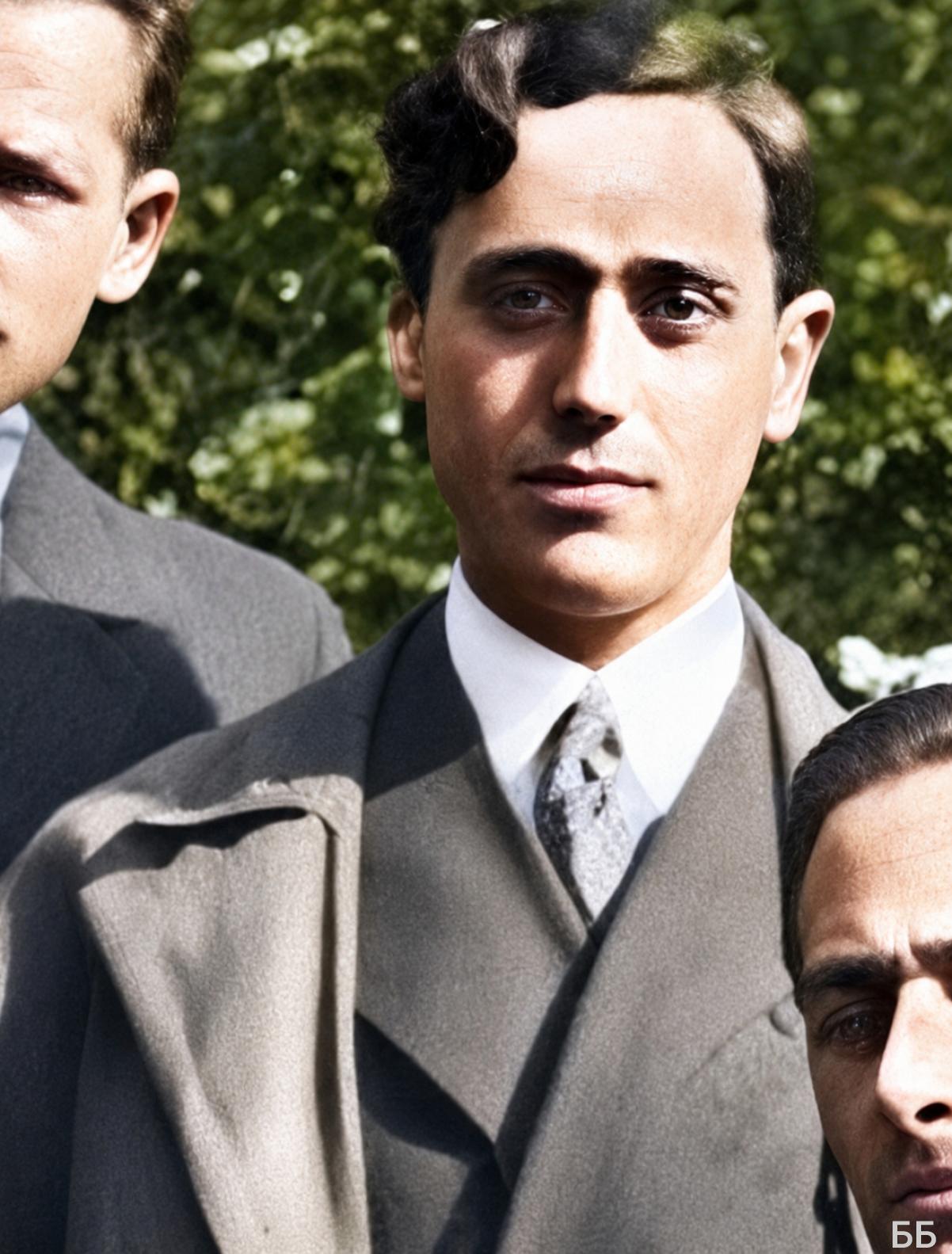
Lewi Wajngarten, son of Icek (Siedlce, Poland, 1911 – probably 1943)
Some people leave behind books, diaries, and photographs.
And sometimes, some people leave behind only a question.
My grandfather, Lewi Wajngarten, was born on July 10, 1911, in Siedlce, Poland.
He was an upholsterer by profession and a gifted self-taught musician, a man who loved creating with his own hands and playing instruments that he learned to play—and often built—himself, especially the guitar. Among the instruments he made was a full-sized guitar constructed entirely from pieces of wood and matchsticks that he found and carefully assembled himself in order to play it.
When World War II broke out, he and his wife Henia fled eastward in the hope of saving their family. Their journey took them to Białystok and later to the Komi region in northern Soviet Russia. They were deported to a labor camp in the Syktyvkar area, north of Arkhangelsk, where Lewi worked felling trees under extremely harsh conditions.
Very little is known about the final years of his life.
According to testimonies and documents that have been found, he was imprisoned during the war despite having committed no real crime, and he died under tragic circumstances. Sadly, Lewi did not live to see the end of the war or the return of his loved ones to their homeland. Nor did he have the chance to watch his sons grow up.
His sons, Matys (born in 1940) and Izak (born in 1943), later immigrated to Israel and eventually changed the family name to Granot. Matys became an electronics technician, while Izak became a stamp designer.
For decades, Lewi remained almost a faceless figure.
One photograph.
A few documents.
A handful of references scattered through archives.
Yet behind every document stands a human being.
A man who loved music.
A man who built a family.
A man who was uprooted from his home.
A man who struggled to survive through one of the darkest periods in human history.
Today, as I search for traces of him in archives and old records, I am not searching only for dates and facts.
I am searching for the person.
For the voice that was never heard.
For the story that was never told.
For a life that was cut short far too soon.
This is my way of saying:
Lewi, we have not forgotten you.
Even if only fragments of memory remain, even if it has taken decades to begin piecing together the puzzle, your name, your life, and your story continue to live on through your children, grandchildren, and the generations that followed.

 Anat Granot